Insights
How Leap Reduces the Total Cost of Multiple Sclerosis Care

For patients requiring long-term MS infusions like Ocrevus or Tysabri, traditional hospital-based treatment comes at a significant financial and logistical cost. Leap provides an alternative: cost-effective, patient-friendly infusion therapy that eliminates unnecessary expenses and administrative barriers.
Key Areas Where Leap Health Saves Employers Money
Leap Health's model addresses the biggest cost drivers in MS treatment by:
- Eliminating unnecessary drug markups: On average, Leap saves $51,000 annually per patient.Leap Health’s pass-through pricing ensures employers pay the actual cost of MS drugs, with no additional markups.
- Reducing site-of-service costs: Leap shifts patients away from high-cost hospital outpatient infusions, which can inflate treatment costs by up to 500%.With home infusion, patients avoid facility fees and excessive administrative costs.
- Improving adherence and reducing long-term disability: Missed or delayed infusions lead to worsening symptoms, hospitalizations and long-term disability claims.Leap Health’s proactive care coordination ensures MS patients stay on schedule, reducing complications and improving health outcomes.
- Enhancing workforce productivity: The average MS patient spends an entire day off work for an infusion due to travel, long wait times and post-treatment recovery.Leap Health cuts infusion time to just two hours at home, allowing patients to return to work and daily activities sooner.
March Is National MS Education and Awareness Month
March is a time to raise awareness about MS and advocate for better, more affordable care. For employers, this means recognizing the significant financial and workforce burden that MS places on their organizations and taking action to reduce these costs without sacrificing care quality.
Leap is committed to making MS treatment more accessible, cost-effective, and patient-friendly. By eliminating inflated infusion costs and reducing workplace disruptions, Leap helps employers provide better care while saving millions annually.
More insights

The Infusion Cost Crisis: Why Medical Benefit Drug Spend Keeps Escalating
For employers, however, infusion care has quietly become one of the fastest-growing and least unders...

Leap Joins the Castlight Ecosystem to Simplify Infusion Care
Leap has joined the Castlight ecosystem to give TPAs and employers a more transparent, predictable, ...

Rebates, what rebates? Understanding pharmacy rebates for J-Code drugs
Pharmacy rebates are manufacturer-paid discounts, typically negotiated behind

Demystifying Specialty Drug Pricing Acronyms, and Why They All Fail Employers
Behind the exorbitant costs of infusion therapies, you’ll find layers of complexity—and three acrony...

Safely Infusing Immunoglobulin in the Home Setting: Clinical Considerations and Best Practices
Immunoglobulin (Ig) therapies are essential in the treatment of primary immunodeficiency (PID), chro...

Leap and Amwins Partner to Deliver Low-Cost, Convenient Infusion Therapy
Leap and Amwins Rx, today announced a strategic collaboration that will bring significant benefits t...

Bringing Relief Home for Annie
Helping a working parent stay on track with infusion care

Leap and Blackhawk Claims Service Partner to Reduce Specialty Medication Costs and Improve Patient Access
We're so excited to announce our strategic partnership with Blackhawk Claims Service, a leading thir...
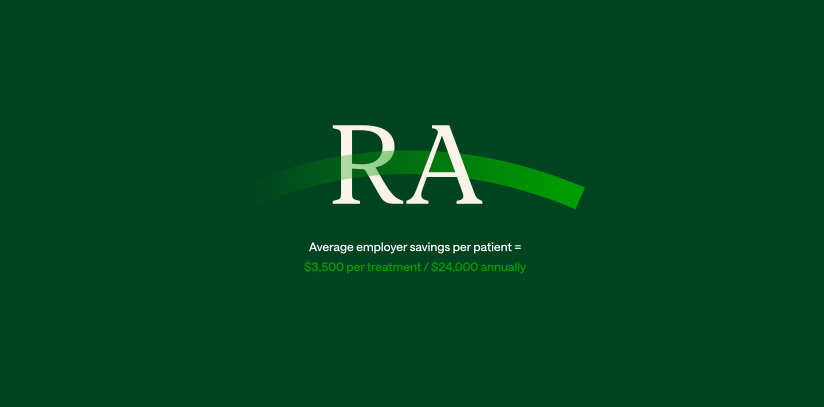
The High Cost of RA Infusions – and How Leap Fixes It
For many patients, biologic infusions such as Remicade, Actemra, and Orencia are essential but they ...

Why Home Infusion Is Safe, Effective – and Preferred by Patients
More patients and employers are choosing home infusion as a safe, effective alternative to hospital-...